
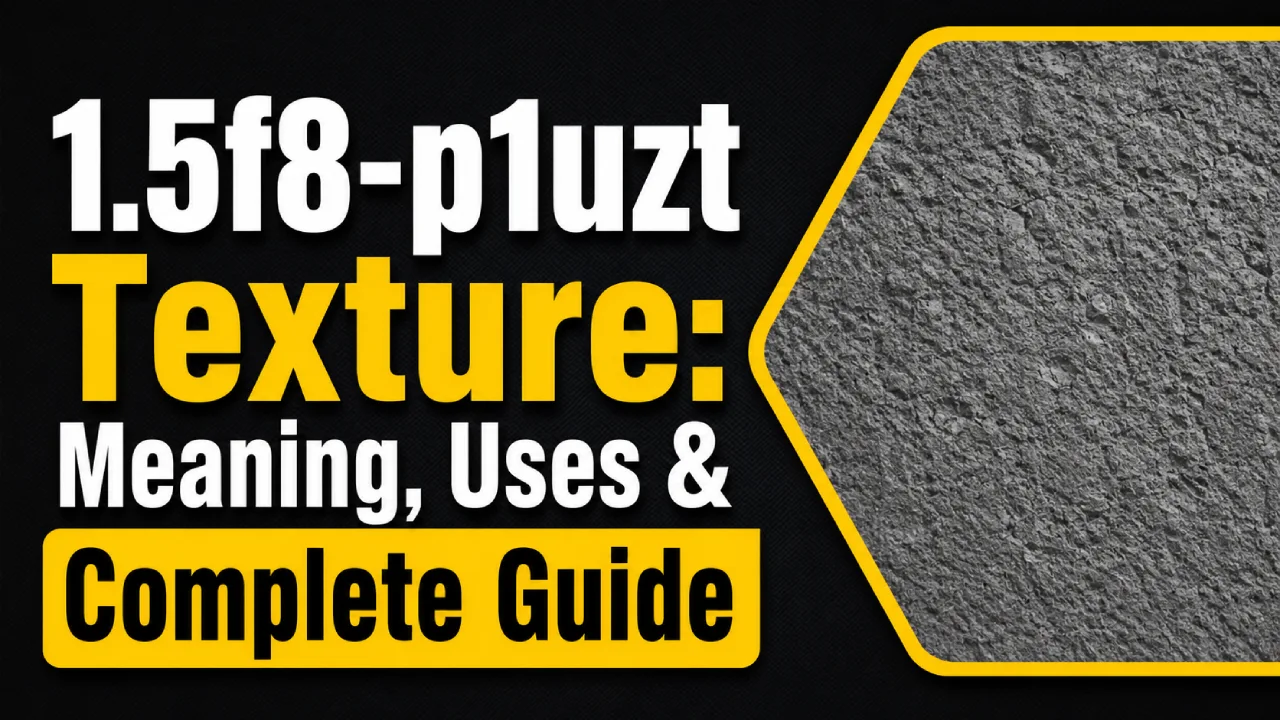
1.5f8-p1uzt texture is a term that has recently appeared in online discussions, digital asset libraries, gaming communities, and technical searches. While there is no widely recognized industry-standard definition for this specific texture name, it appears to function as a unique identifier, texture code, or asset reference used within digital design, gaming, rendering, or software development environments.
If you’ve encountered the term and are wondering what it means, this guide explains the possible interpretations, uses, and significance of the 1.5f8-p1uzt texture.
What Is 1.5f8-p1uzt Texture?
The phrase 1.5f8-p1uzt texture appears to be a coded texture label rather than a descriptive texture name.
In many digital systems, textures are assigned unique identifiers to:
- Organize asset libraries
- Prevent duplicate filenames
- Simplify database management
- Track texture versions
- Improve workflow efficiency
Instead of naming a file “stone-wall-texture.jpg” or “wood-floor.png,” some systems automatically generate codes such as 1.5f8-p1uzt to identify a specific texture asset.
Understanding Digital Textures
Before diving deeper, it helps to understand what a texture is.
A texture is a digital image applied to a 3D model, surface, or graphic element to create visual detail.
Common examples include:
- Brick walls
- Metal surfaces
- Fabric patterns
- Wood grain
- Stone materials
- Skin textures for characters
Textures help make digital objects appear more realistic without increasing geometric complexity.
Where Might 1.5f8-p1uzt Texture Be Used?
Depending on the source, the texture could be associated with several industries.
1. Video Game Development
Game developers use thousands of textures for environments, characters, and objects.
A code such as 1.5f8-p1uzt may represent:
- Terrain textures
- Character materials
- Environmental assets
- User-generated content files
Many game engines rely on automatically generated IDs to manage large asset collections.
2. 3D Modeling and Rendering
Programs used for 3D design often assign unique identifiers to texture maps.
Possible uses include:
- Architectural visualization
- Product rendering
- Animation projects
- Virtual reality experiences
The texture code helps software locate and apply the correct material during rendering.
3. Graphic Design Systems
Design platforms frequently use coded asset names behind the scenes.
In these environments, 1.5f8-p1uzt texture could identify:
- Background patterns
- Surface effects
- UI design elements
- Downloadable texture packs
4. AI-Generated Assets
Modern AI image-generation tools create vast numbers of texture files.
Many systems automatically generate unique names and IDs to track:
- Texture versions
- Training outputs
- Generated materials
- Asset collections
This makes coded texture names increasingly common.
Why Do Texture Files Use Codes?
At first glance, a name like 1.5f8-p1uzt may seem confusing.
However, coded identifiers offer several advantages:
Better Organization
Unique IDs prevent file conflicts when thousands of textures exist in a single project.
Easier Version Tracking
Developers can identify updated or modified textures without renaming files.
Improved Database Management
Automated systems can quickly locate and reference assets using unique codes.
Reduced Human Error
Duplicate filenames often create workflow problems. Unique IDs help eliminate this issue.
How to Identify a 1.5f8-p1uzt Texture
If you have access to the actual file, you can learn more about it by checking:
File Properties
Review:
- File type
- Resolution
- Creation date
- Software origin
Associated Software
Determine where the texture originated.
Examples include:
- Game engines
- Rendering software
- Asset management platforms
- AI generation tools
Visual Inspection
Opening the texture file may reveal whether it represents:
- Stone
- Metal
- Fabric
- Wood
- Procedural patterns
- Character materials
Is 1.5f8-p1uzt Texture a Virus or Security Threat?
In most cases, no.
A texture identifier is generally just a file reference or asset code.
However, you should always exercise caution when downloading files from unknown sources.
Follow these safety practices:
- Download only from trusted websites
- Scan files with antivirus software
- Verify file extensions
- Avoid suspicious executable files
A genuine texture file typically uses formats such as:
- PNG
- JPG
- TIFF
- DDS
- TGA
Future Importance of Texture Identifiers
As digital content creation expands, coded asset identifiers like 1.5f8-p1uzt texture are likely to become even more common.
Industries increasingly relying on texture management include:
- Gaming
- Virtual reality
- Augmented reality
- Architectural visualization
- AI-generated content
- Metaverse development
Unique identifiers help manage millions of digital assets efficiently.
Final Thoughts
The term 1.5f8-p1uzt texture most likely refers to a uniquely identified digital texture asset rather than a specific texture category. While its exact origin may vary depending on the software, platform, or project where it appears, the naming structure suggests it serves as an asset-tracking or texture-management reference.
As game development, 3D rendering, and AI-generated graphics continue to grow, identifiers like 1.5f8-p1uzt texture will play an increasingly important role in organizing and managing digital resources efficiently.